

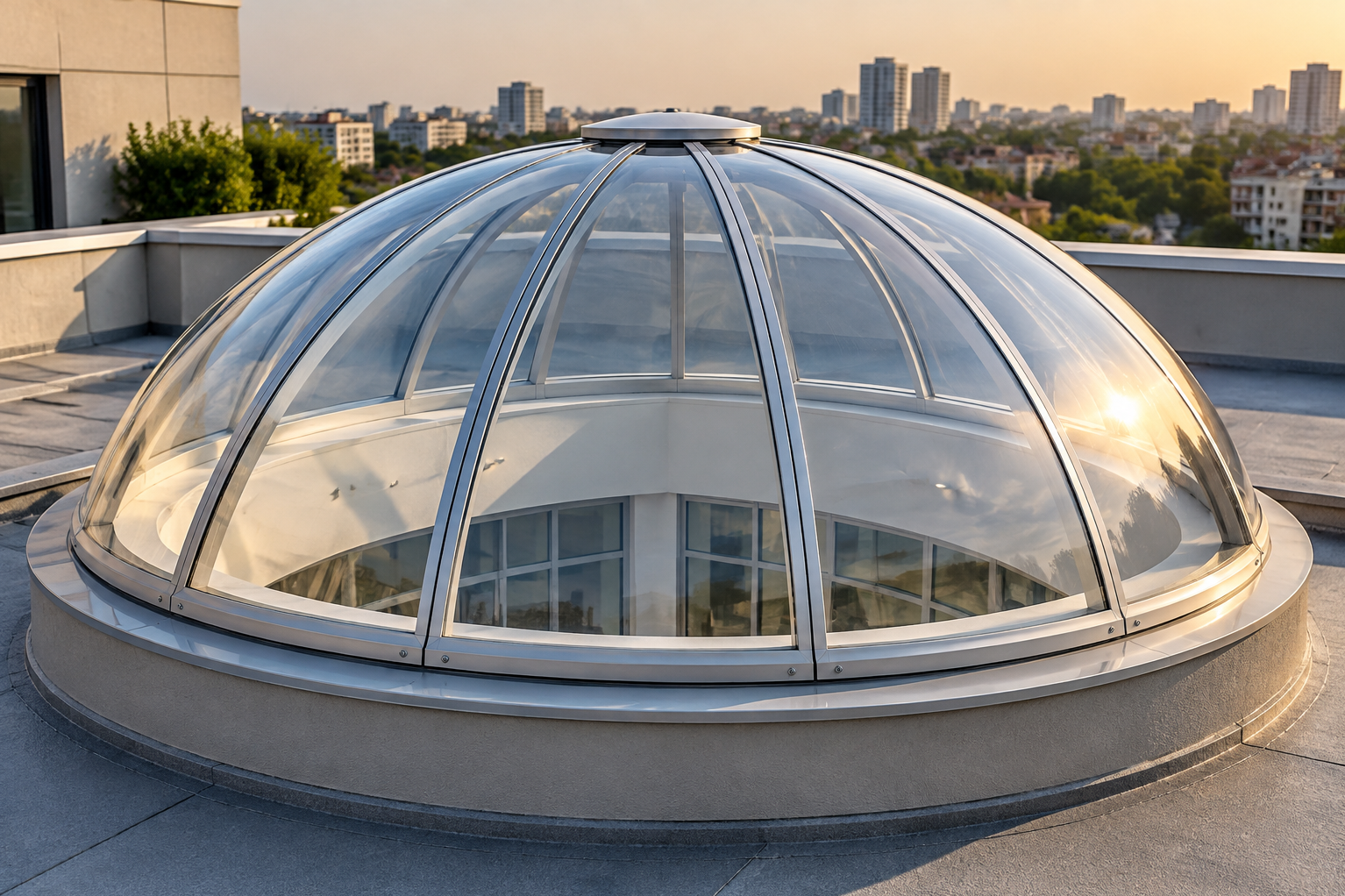
Polycarbonate domes can bring daylight into interior spaces while creating a distinctive architectural feature. They may be used over terraces, atriums, entrances, roof openings, commercial spaces, institutions, and other areas where designers want overhead coverage without the visual weight associated with an opaque roof.
Choosing a Polycarbonate Dome Manufacturer involves more than selecting a dome shape from a catalogue. Sheet specification, structural design, drainage, fabrication accuracy, weather sealing, and installation all influence the finished result.
Begin With the Opening and Site Conditions
Accurate site dimensions are fundamental.
Before fabrication begins, determine:
- Opening dimensions
- Required dome height
- Supporting curb or base
- Surrounding roof condition
- Drainage direction
- Nearby walls or obstructions
- Maintenance access
For projects in New Delhi, local heat, strong sunlight, seasonal rainfall, dust, and wind exposure should also be incorporated into planning.
Check the Polycarbonate Specification
The sheet used for a dome should be appropriate for the intended environment.
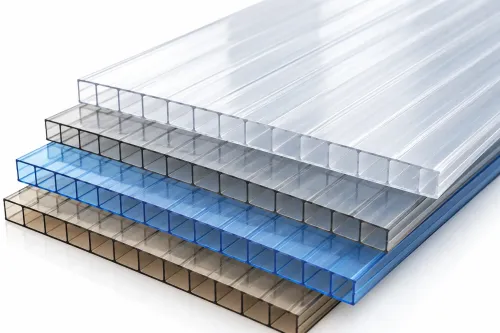
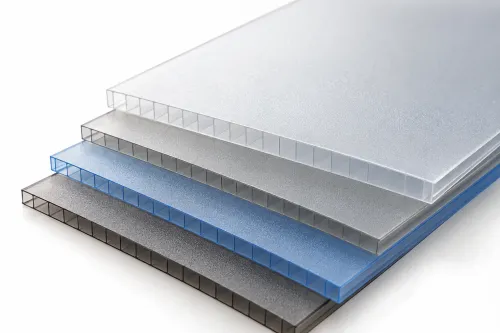
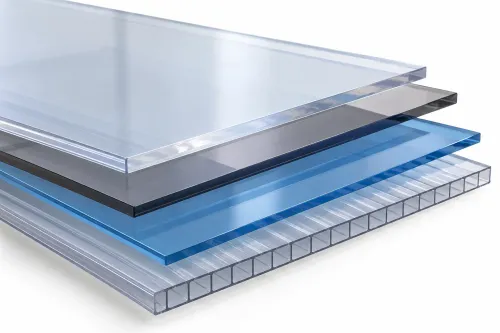
Depending on the project, considerations can include transparency, tint, thickness, UV protection, thermal performance, and appearance.
A clear dome can maximize daylight, while tinted or diffused options may be considered where controlling brightness is important.
Material choice should complement the building rather than being treated separately from the overall design.
Evaluate the Supporting Structure
Even a well-formed dome depends on an appropriately designed supporting system.
The frame needs to accommodate the dome geometry and expected loads while providing suitable fixing points. Metal selection, section sizes, corrosion protection, and connection details should be based on the actual project.
An inadequately planned frame can create movement, poor alignment, leakage points, or stress around the sheet.
Ask How Thermal Movement Is Managed
Polycarbonate expands and contracts as temperatures change.
Fixing arrangements should allow for expected thermal movement rather than holding the sheet so rigidly that stress develops around holes or edges.
This becomes especially relevant in Delhi's climate, where roof installations can experience substantial temperature changes.
Pay Attention to Water Management
A dome is an overhead weather barrier, so drainage and sealing require careful attention.
The design should reduce locations where water can collect. Flashing, joints, sealants, and interfaces with the existing roof should be planned as a complete system.
Regular maintenance access is also valuable because leaves, dust, and debris can accumulate around roof structures.
Review Fabrication Capability
A capable manufacturer should be able to understand the geometry and practical installation conditions instead of treating every dome as an identical product.
Polyfab Traders undertakes polycarbonate-related requirements in New Delhi, including fabricated applications where sheet selection and structural coordination need to work together.
Before confirming a manufacturer, review drawings, material specifications, dimensions, frame details, fixing methods, drainage planning, and site responsibilities.
A polycarbonate dome succeeds when material and structure function as one system. Careful planning at the specification stage can make the finished installation easier to maintain, visually cleaner, and better suited to the building over its intended service life.