

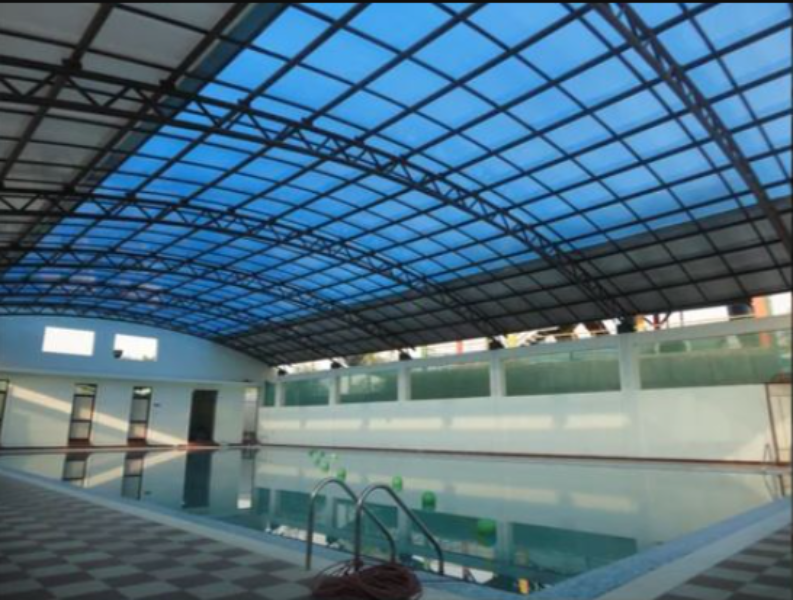
A swimming pool covering can help create a more usable and protected environment around residential, institutional, hospitality, or recreational pools. However, a successful swimming pool covering with structure requires careful planning because the installation must perform in a humid, wet, and often chemically exposed environment.
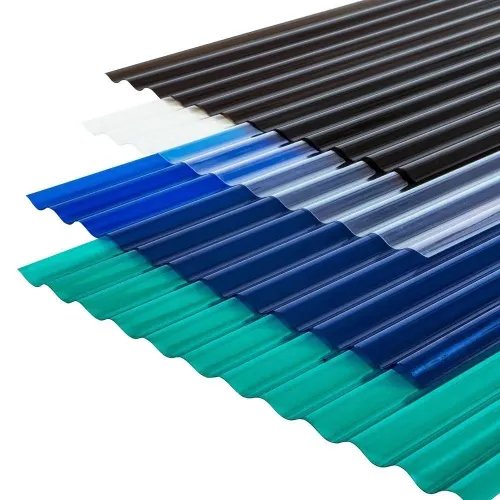
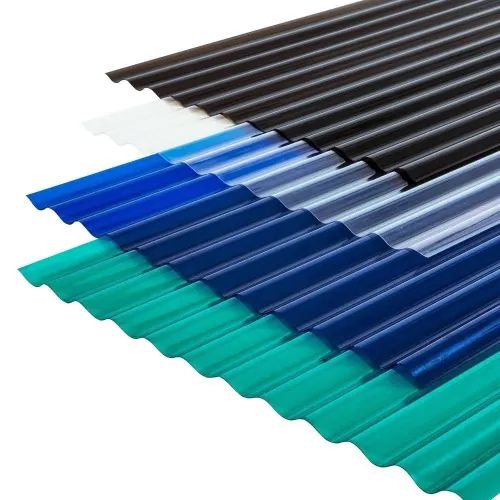
Polycarbonate is one material that can be considered for suitable pool-covering structures because it allows designers to combine natural light with a lightweight covering system.
What Should the Cover Achieve?
Start by defining the reason for installing it.
Some projects primarily need weather protection. Others want partial enclosure, greater year-round usability, controlled sunlight, or an architectural feature.
These objectives influence the shape, transparency, ventilation, sheet specification, and supporting structure.
Polyfab Traders works with polycarbonate applications in New Delhi where customised covering requirements need to be assessed according to the site.
Consider Ventilation Carefully
An enclosed or partially enclosed swimming pool can create high humidity.
Without appropriate ventilation, condensation may become an issue. The design should therefore consider airflow rather than focusing solely on closing the space.
For large installations, the relationship between the covering, ventilation, pool environment, and supporting building should be evaluated during planning.
Structural Design Is Critical
The polycarbonate covering is only one component.
The supporting structure needs to accommodate the selected sheets, dimensions, fixing system, and site conditions.
Key considerations include:
- Pool dimensions
- Required covered area
- Height and shape
- Frame material
- Sheet type and thickness
- Ventilation
- Drainage
- Access for cleaning
- Appearance
Planning for New Delhi Weather
Outdoor and semi-outdoor swimming pools in New Delhi experience intense summer sun, dust, monsoon rain, and seasonal changes.
A covering design should respond to these conditions while maintaining practical access and maintenance.
Depending on the project's objectives, transparency may also need consideration. Maximum daylight is not automatically the best choice if heat and glare become uncomfortable.
Get the Site Details Right First
Custom covering projects are easier to estimate accurately when dimensions, photographs, architectural drawings, and expected usage are available.
Rather than asking only for a rate per square foot, buyers should compare the proposed material specification, structural approach, fabrication scope, and installation requirements.
A swimming pool covering is ultimately a complete engineered installation rather than simply a roof placed above water. Careful coordination between material and structure is what creates a practical result.