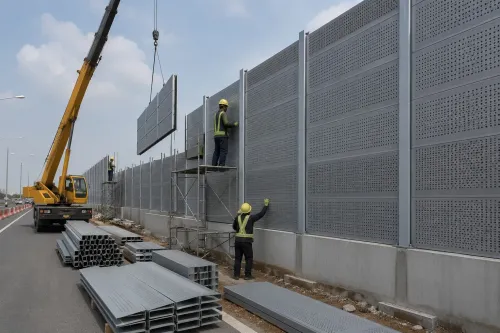


Noise from roads, industrial facilities, machinery, transport corridors, and commercial activities can affect nearby properties and work environments. Physical barriers are one method used to manage how sound travels between a noise source and a receiver.
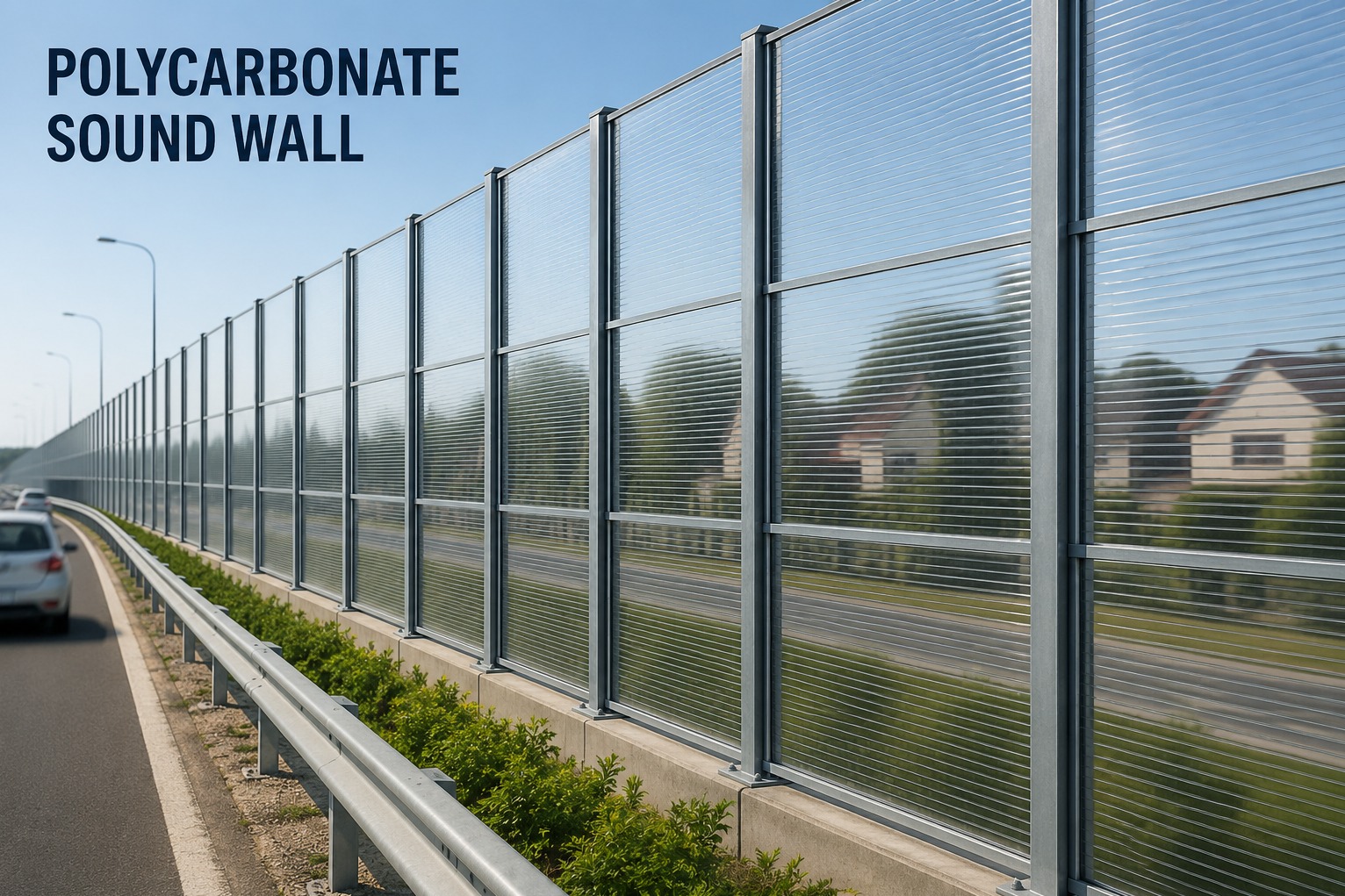
A polycarbonate sound wall can be considered where a project requires a noise barrier while retaining visibility or natural light.
Polyfab Traders serves polycarbonate project requirements in New Delhi, including specialised applications where material characteristics need to complement structural and acoustic planning.
Why Use Transparent Material in a Sound Wall?
Traditional opaque barriers can block views and daylight. In some locations, this can make an enclosed area feel visually restricted.
Transparent polycarbonate panels can provide an alternative for projects where maintaining sightlines matters.
Potential applications may include:
- Transport corridors
- Industrial boundaries
- Commercial premises
- Institutional sites
- Infrastructure projects
- Selected residential boundaries
A Sound Wall Is More Than a Sheet
One important point for project owners is that noise-control performance does not come from selecting a transparent sheet alone.
Barrier height, length, position, continuity, structural framework, gaps, surrounding geometry, and the relationship between the noise source and receiver all matter.
Therefore, specifying a polycarbonate panel without considering the complete barrier design can produce disappointing results.
What Should Buyers Evaluate?
For projects in New Delhi and Delhi NCR, begin with the actual noise problem.
Identify the source, affected area, available installation space, required barrier dimensions, and whether transparency is necessary.
Then assess:
- Panel thickness
- Structural support
- Impact requirements
- Outdoor exposure
- UV considerations
- Panel joining
- Maintenance access
- Foundation requirements
Engineering and acoustic inputs may be necessary for projects with defined performance targets.
When Does Polycarbonate Make Sense?
Transparent sound walls can be especially relevant where an opaque barrier would interfere with visibility, daylight, aesthetics, or the surrounding architectural environment.
Polycarbonate can also provide useful impact characteristics, depending on the selected specification.
The best results come from treating the sound wall as a complete system.
For project developers, contractors, industries, and infrastructure stakeholders in New Delhi, readiness begins with proper site information and clearly defined performance expectations. Once these are available, panel selection and structural fabrication can be aligned with the broader noise-management strategy.