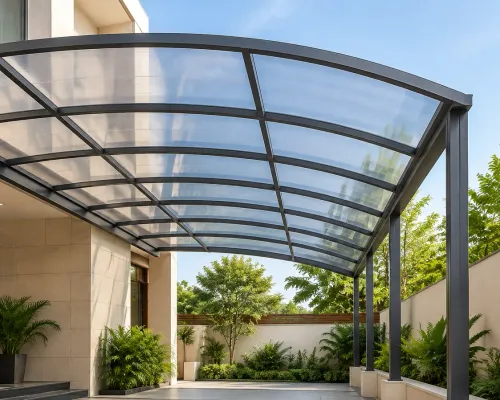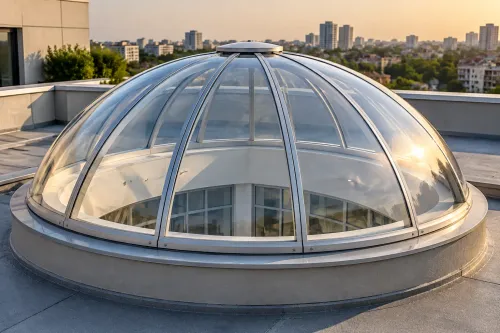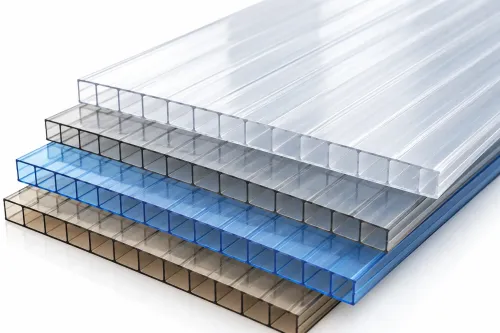


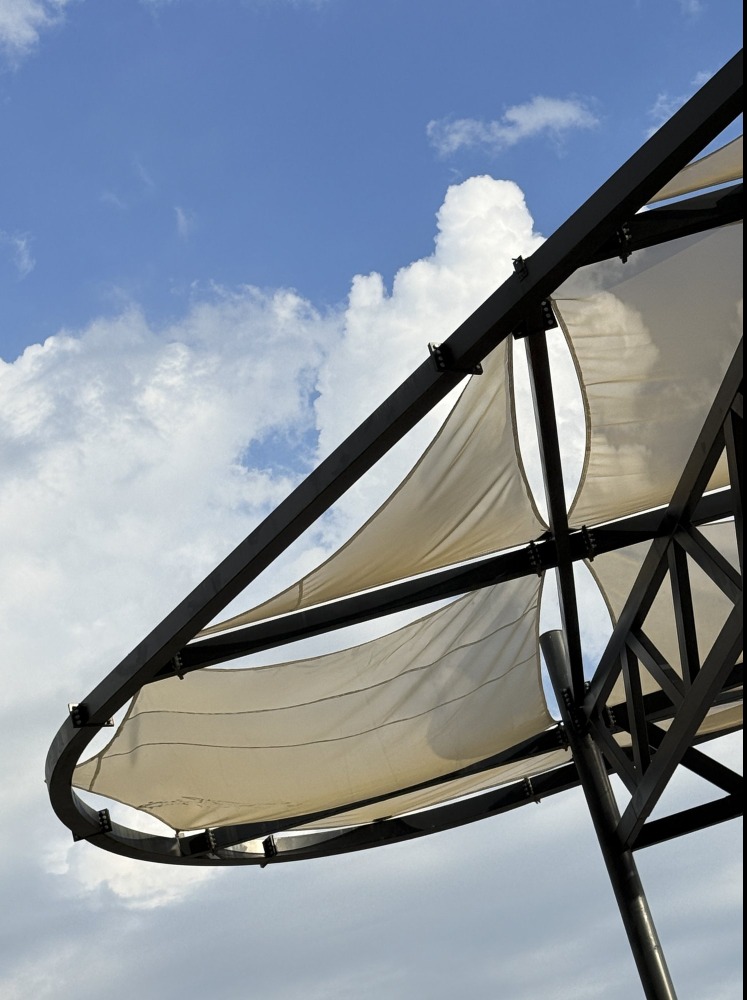
Curved and parabola-style coverings are often chosen for entrances, walkways, terraces, parking spaces, commercial areas, and architectural features. Their curved profile can provide both weather protection and a lighter visual appearance than many conventional roofing systems.
However, a Perabola Covering Fabricator needs to coordinate geometry, sheet behavior, supporting members, drainage, and installation accurately. Small design mistakes can become much more noticeable on curved structures than on simple flat coverings.
Mistake 1 Choosing the Curve Only for Appearance
The shape of the structure should work with the site.
A curve that looks attractive in a concept image may create awkward clearances, poor drainage, difficult sheet fixing, or unnecessary fabrication complexity when transferred directly to a real building.
Site dimensions and functional requirements should guide the final geometry.
Mistake 2 Ignoring Polycarbonate Bending Limits
Polycarbonate can accommodate curved applications, but the permitted bend radius depends on sheet type, thickness, and product specifications.
Forcing a sheet into an unsuitable radius can introduce excessive stress.
The fabricator should determine the curve with the selected sheet specification in mind rather than designing the frame first and forcing the material to fit later.
Mistake 3 Using Inadequate Support
Curved sheets still require appropriate structural support.
Support spacing should account for panel dimensions, material characteristics, project geometry, and expected environmental loads.
Overly wide unsupported areas may lead to unwanted movement or deflection.
Mistake 4 Forgetting Thermal Expansion
New Delhi experiences significant seasonal and daily temperature variations, and roof sheets exposed to direct sunlight can become considerably warmer than the surrounding air.
Polycarbonate naturally expands and contracts.
Fixing details should therefore accommodate movement. Improperly restricted sheets can develop stress around fasteners or edges.
Mistake 5 Treating Sealing as an Afterthought
Water ingress frequently occurs at interfaces rather than through the sheet itself.
Wall junctions, overlapping areas, fastener locations, edges, and transitions require suitable detailing. Sealants and accessories should also be compatible with the material.
Mistake 6 Poor Rainwater Planning
A curved roof does not automatically solve drainage.
The direction of runoff must be considered in relation to entrances, walkways, neighbouring property, walls, and ground drainage.
Gutters may be required depending on the project.
Mistake 7 Comparing Quotes Only by Area Rate
A low rate may exclude structural steel, finishing, gutters, access equipment, specialized fabrication, or particular sheet grades.
Buyers should compare complete specifications rather than only the headline price.
Polyfab Traders handles polycarbonate and structural fabrication requirements in New Delhi for customers seeking application-specific covering solutions.
Before finalizing a parabola covering, request clear information on dimensions, curve profile, sheet specification, frame material, finish, fixing method, drainage, and installation scope.
Curved coverings work best when geometry and material behavior are considered together. Avoiding these planning mistakes can produce a cleaner installation while reducing preventable issues during fabrication and subsequent use.